
BAGPIPE LESSONS · SHEFFIELD & ONLINE
Fancy learning the pipes?
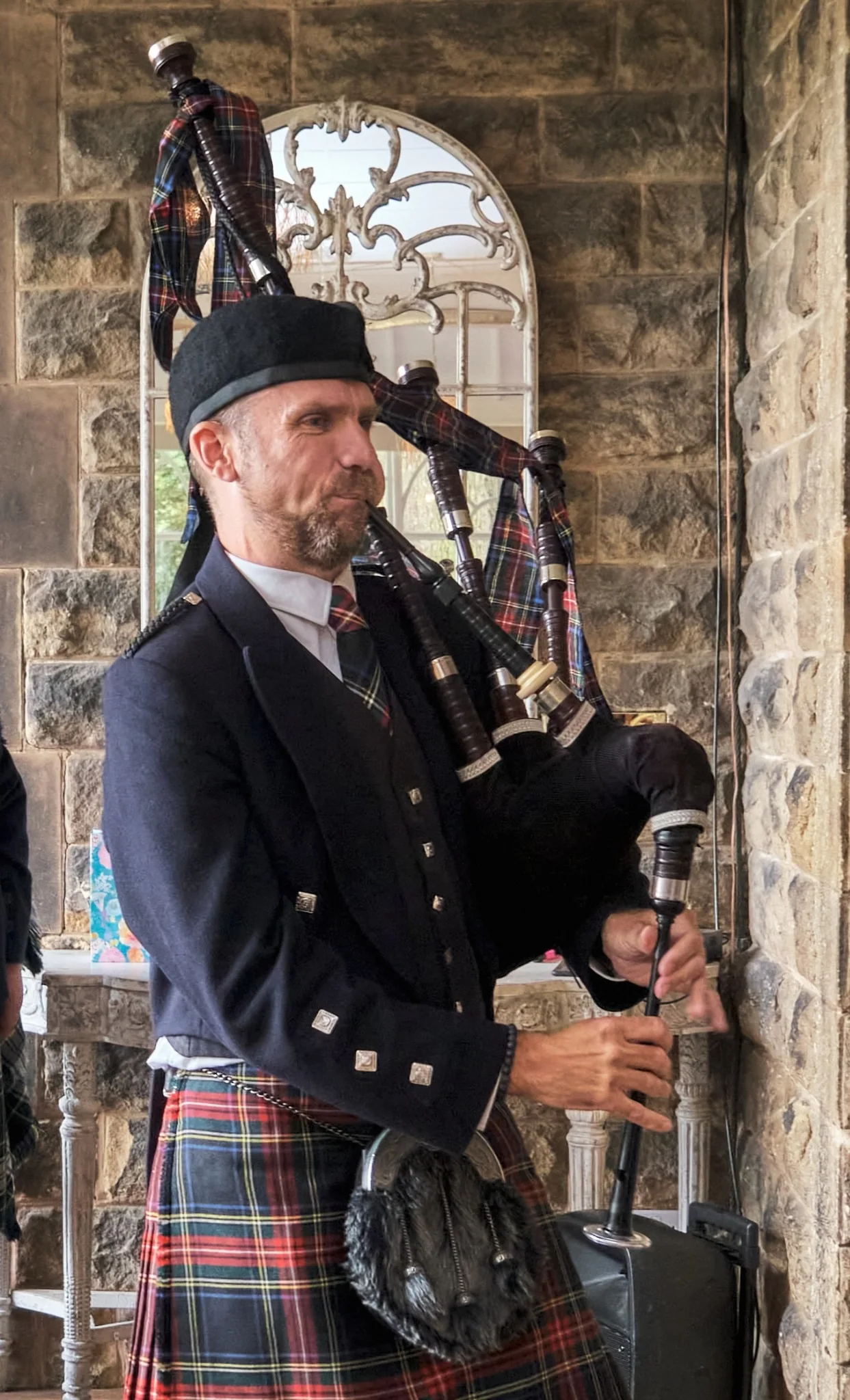
If you’ve always wanted to have a go, or you’ve already started and would like some help, I offer one-to-one lessons online and in the Sheffield area.
You don’t need to read music or buy a set of bagpipes before you start. We’ll begin with the basics, work at a sensible pace and build from there.
Your first 30-minute introduction is free. It’s a chance to have a chat about what you’d like to do and how I can help.
A WAY TO LEARN THAT SUITS YOU
Online or face to face
START WITH A PRACTICE CHANTER
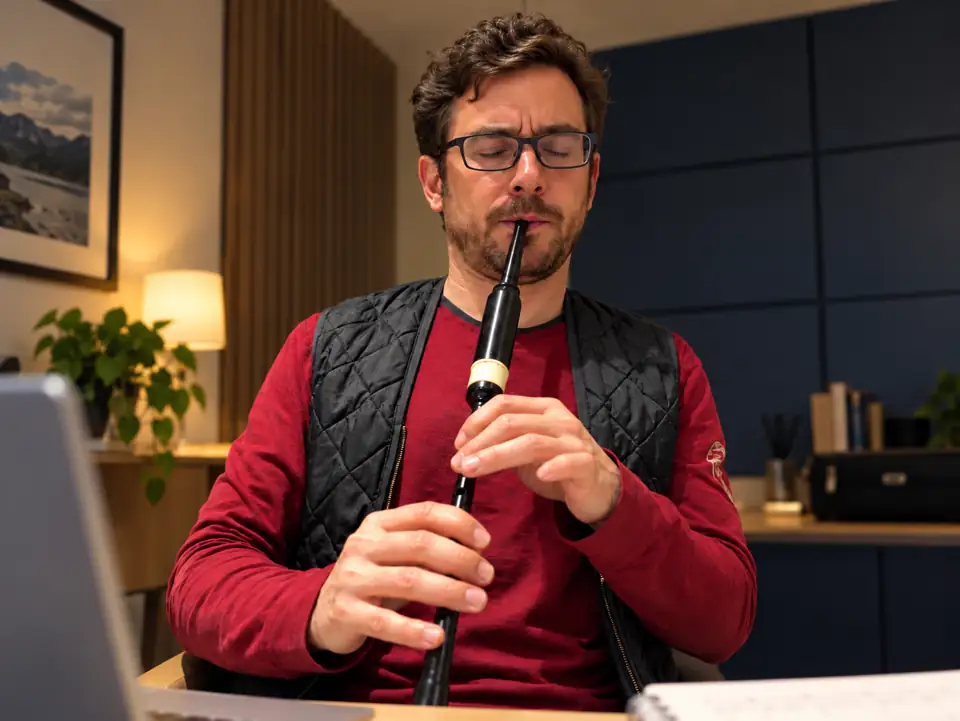
Everyone starts on a practice chanter
All beginners start on the practice chanter. It’s much quieter and easier to blow than a full set of pipes, so we can concentrate on the basics — finger position, reading music, rhythm and learning tunes — without the volume and effort of keeping the bag and drones going.
A full set of bagpipes is a big investment. A practice chanter lets you find out whether you take to the instrument with only a small outlay to begin with. You don’t need to buy pipes before you’ve had a chance to learn.
BUY ONCE, BUY SOMETHING THAT WORKS
Buying your first practice chanter
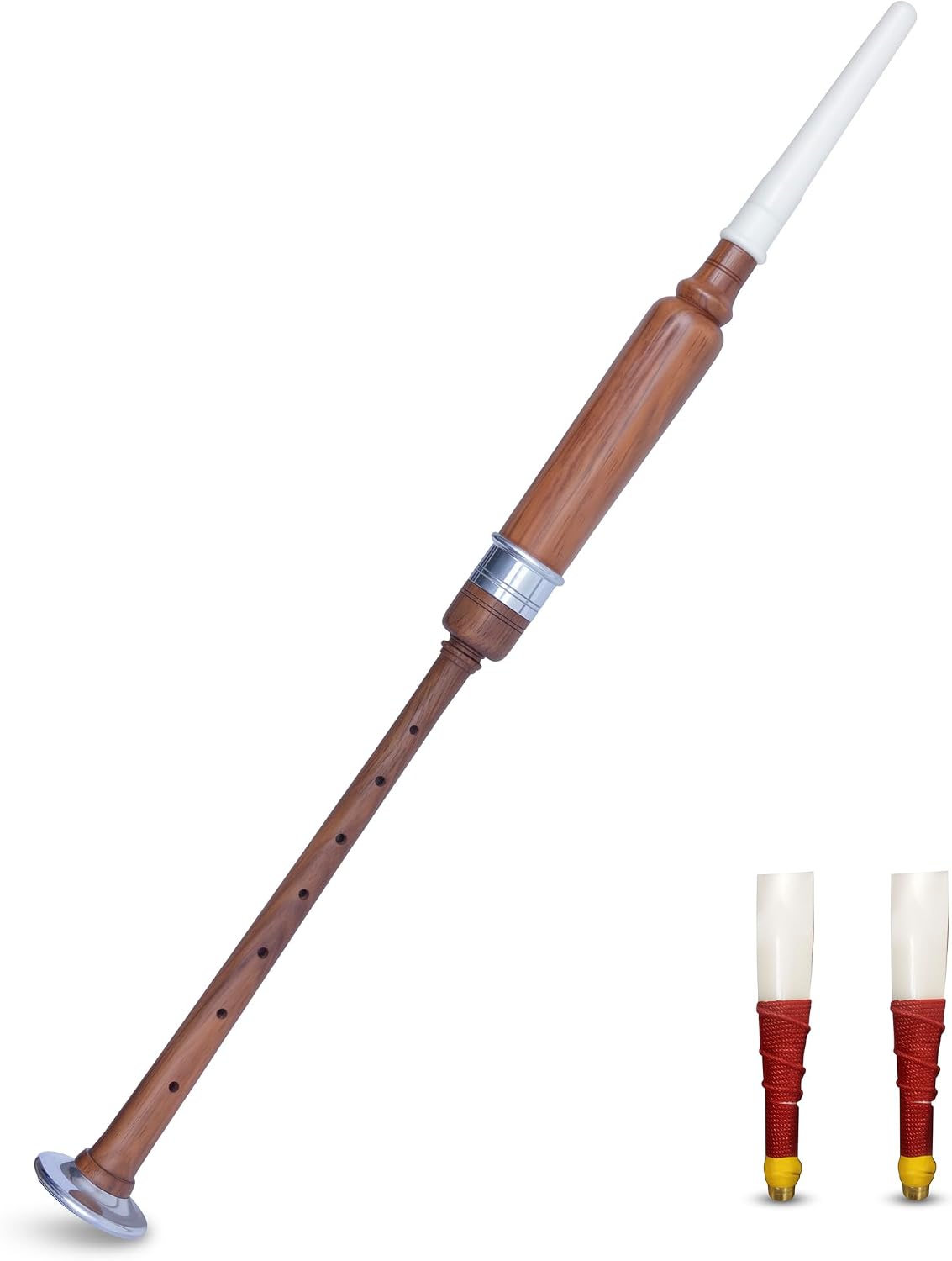
EXAMPLE TO AVOID
This is the type I’d avoid
This is an example of the type of cheap chanter I advise beginners against buying. I’d put the money towards a decent plastic practice chanter from a specialist bagpipe supplier instead.
If you’re unsure about one you’ve seen, send me a photo or a link before you buy.
WHEN YOU’RE READY
Moving from chanter to pipes
Most learners move onto the full pipes once they can play a small selection of bagpipe tunes confidently on the practice chanter. As a rough guide, this is often around six months, depending on how much you practise and how you’re getting on.
There’s no fixed deadline. We’ll make sure your basics are secure first, then work on blowing steadily, controlling the bag and bringing everything together. I can advise you on buying pipes when the time comes, so there’s no need to rush into a big purchase.
ONE STEP AT A TIME
What we’ll work on
Get the basics right
Finger position, the scale, reading pipe music and keeping a steady beat. There’s no need for previous musical experience.
Gracenotes, embellishments and tunes
We’ll work on mastering gracenotes and embellishments, putting them into practice as you start building a repertoire of tunes you enjoy playing.
Move onto the pipes
Once you can successfully play a few tunes on the practice chanter, you’ll be ready to move onto the pipes.
A BIT ABOUT MY TEACHING
Lessons to suit you
I started learning when I was nine and have spent over 30 years playing, both on my own and with pipe bands. I also spent over eight years teaching young pipers at the Army Foundation College in Harrogate.
I adapt my lessons to the person learning. Some people want to play for fun and learn favourites such as “Flower of Scotland” and “Scotland the Brave”. Others want to work towards playing professionally. Whatever your aim, we’ll shape the lessons around what you want to achieve and work at a pace that suits you.
If you already play, we can focus on the things you’d like help with, whether that’s learning new tunes, improving your technique or becoming more confident on the pipes.
I also enrol my students in my Student Portal, where you can watch videos and access support between lessons. It gives you something to refer back to while you’re practising at home.
It’s lovely to see students taking their playing out into the world. Two of my local students now play in the Sheffield Pipe Band, and one of them regularly leads the band with solo performances.
More about my piping background ↗BEFORE YOU START
A few common questions
Am I too old to learn?
No. Adult beginners are welcome. Tell me what you’d like to get out of it and we’ll work at a pace that suits you.
Do I need to read music?
No — we can learn that as we go. If you already read music, that’s useful, but it isn’t a requirement.
What should I buy first?
Start with a decent practice chanter and a suitable reed from a specialist bagpipe supplier. Plastic chanters start from around £35 and are fine for beginners. Have a chat with me before ordering — you don’t need a full set of pipes yet.
How long before I can play the full pipes?
Often around six months, once you can play a small selection of tunes confidently on the practice chanter. It depends on how much you practise and how you’re progressing, so we’ll move on when you’re ready rather than work to a fixed deadline.
Do you teach children?
Yes. I teach children from as young as seven and hold an enhanced DBS certificate. Get in touch with their age and any musical experience, and we can discuss a suitable chanter and how the lessons would work.
What do I need for an online lesson?
Your practice chanter, a phone, tablet or computer with a camera, and a reliable internet connection. Set the camera up so I can see your hands clearly, and find somewhere we can hear each other without too much background noise. If you’re already playing the pipes, let me know before the lesson so we can plan what to work on.
What should I practise between lessons?
A little, regularly, is much more useful than trying to cram everything in just before your next lesson. Work through the exercises and tunes we’ve covered, take your time with the movements that need attention, and aim to play them steadily before speeding up. You can use the videos in your Student Portal to remind yourself of what we’ve worked on.
How much are lessons?
The first 30-minute introduction is free. Contact me for current lesson prices and arrangements for online or in-person tuition.
LET’S HAVE A CHAT
Tell me where you’re starting from
Let me know whether you’re a beginner or already playing, where you’re based and whether you’d prefer online or face-to-face lessons. We can arrange your free 30-minute introduction from there.